Workerbird for Gig Workers
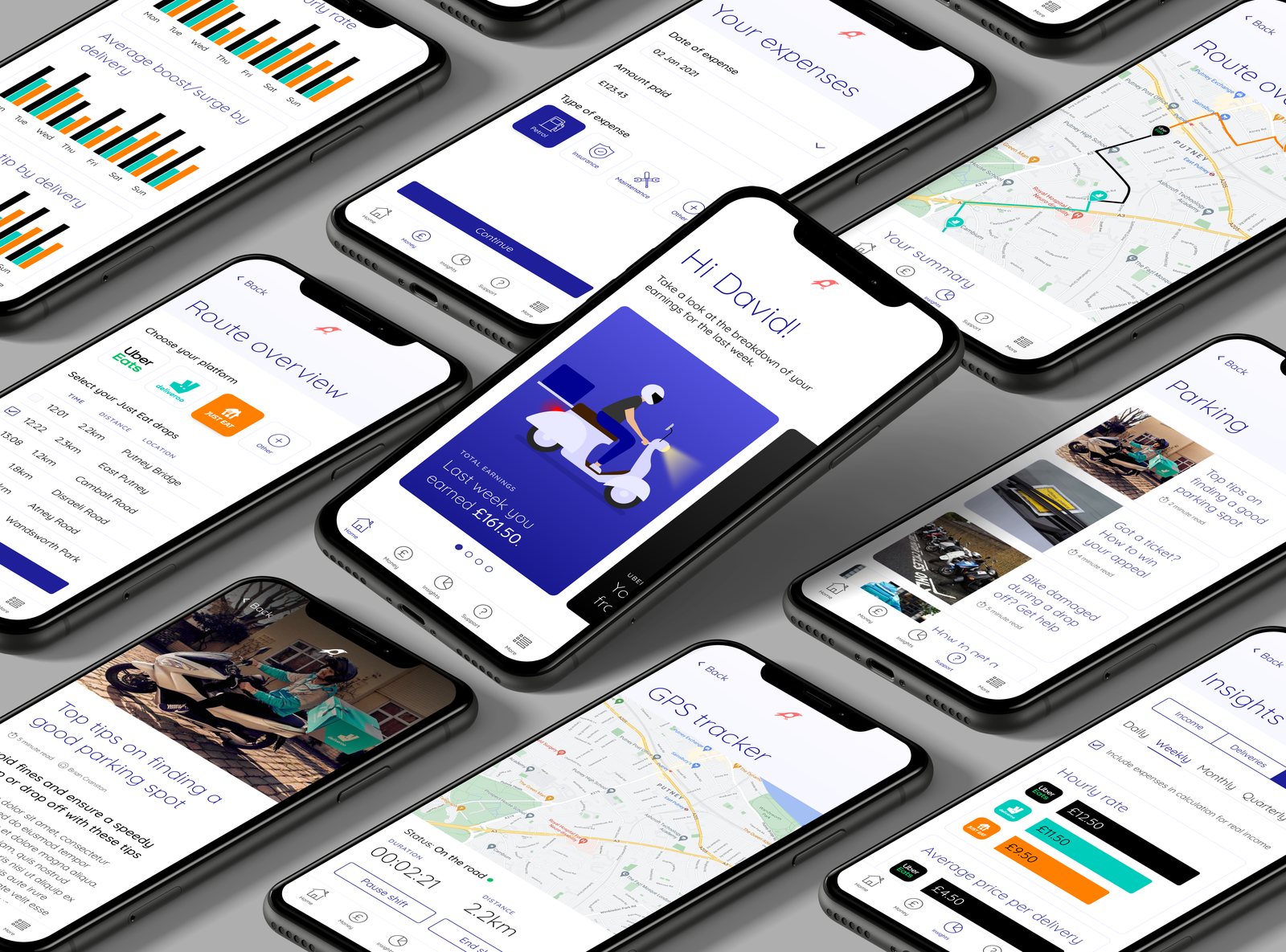
We redesigned the Workerbird app for gig economy workers, starting with delivery and courier riders. The aim was to help riders understand their real take-home pay after expenses, see their working patterns including time spent waiting, get support on everyday problems, and come together as a community to improve their working lives.
I founded Workerbird and led this project: the research, the design sprint and the relationship with the partner organisation.
The problem
Platforms often claim to pay the minimum wage, but their calculations usually count only the time between pick-up and drop-off. They leave out time on standby, time kept waiting at restaurants, and the cost of fuel, maintenance and parking fines. A single ticket can wipe out a day's wages.
Most riders work across several apps at once to earn enough, but each platform reports earnings differently and with gaps, so workers rarely have a clear picture of what they actually earn per hour. Riders also told us how stressful it is to be "managed by an algorithm" they don't understand.
Research
In five weeks we carried out a literature review, spoke with unions, driver cooperatives and couriers, and ran in-depth remote interviews with riders on bikes, motorbikes, scooters and on foot, working across five platforms. Interviewees included women cyclists and motorbike riders, a growing group.
Each interview combined questions about hours, pay and expenses with visual exercises on a virtual whiteboard, where riders mapped the best and hardest parts of the job, described a typical day and prioritised possible features.
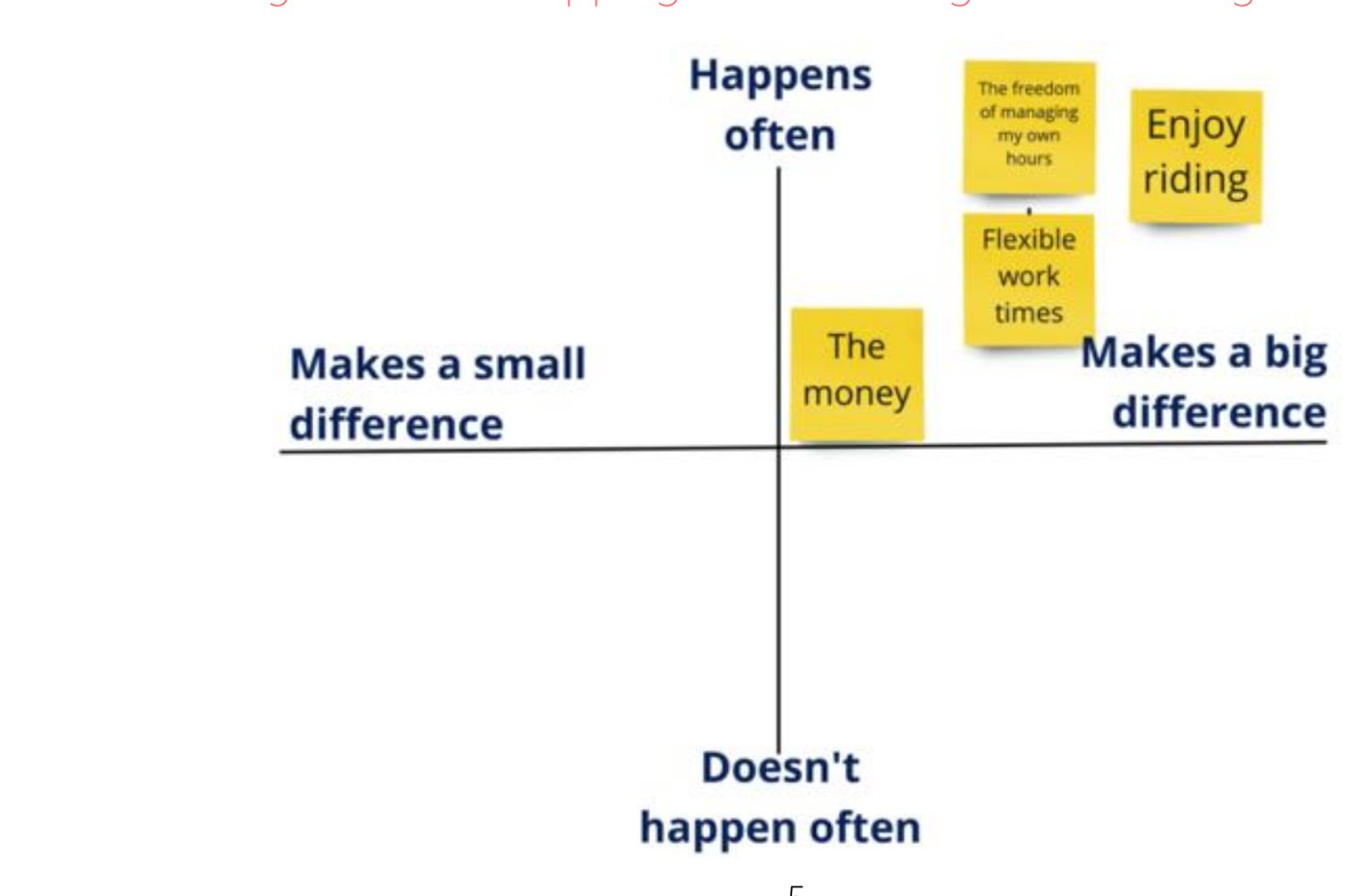
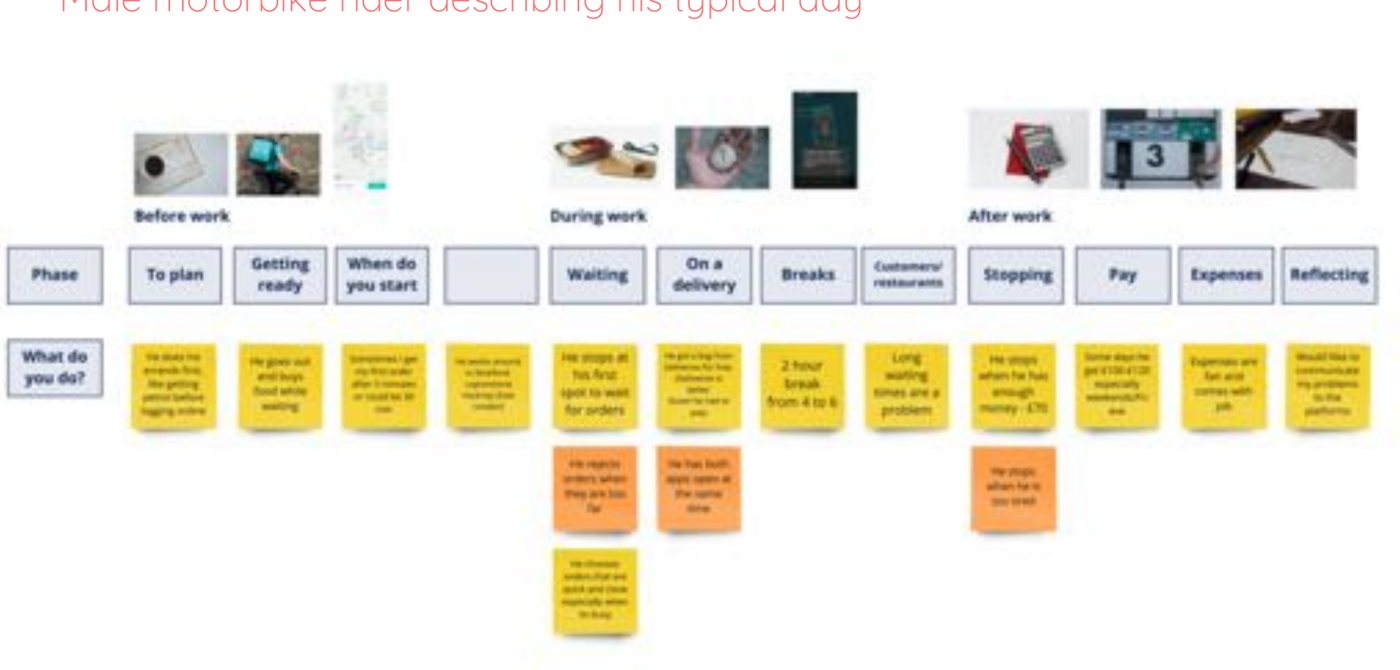
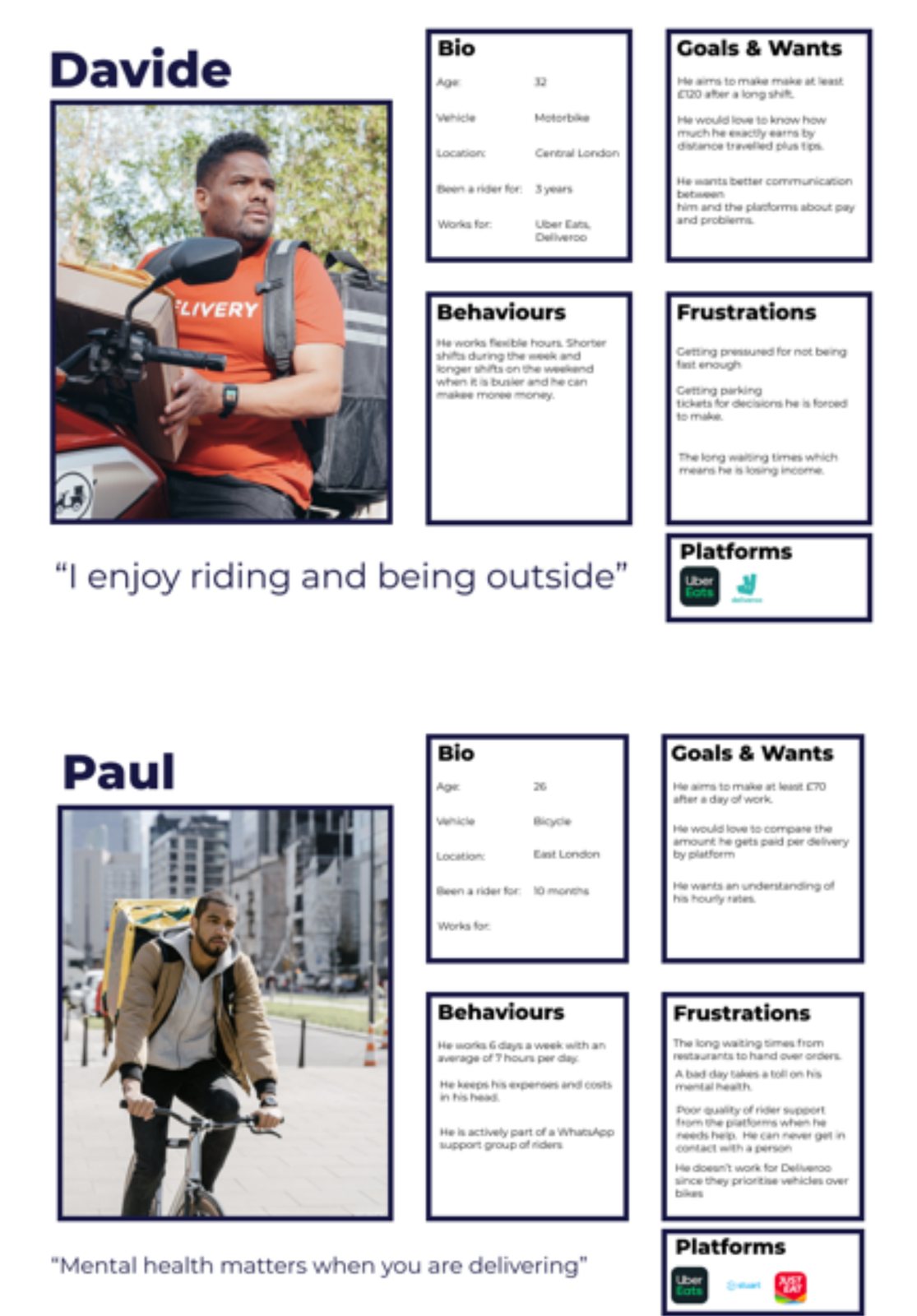
From this we built four personas, empathy maps and problem statements that guided a design sprint.
The solution
We designed features around five areas.
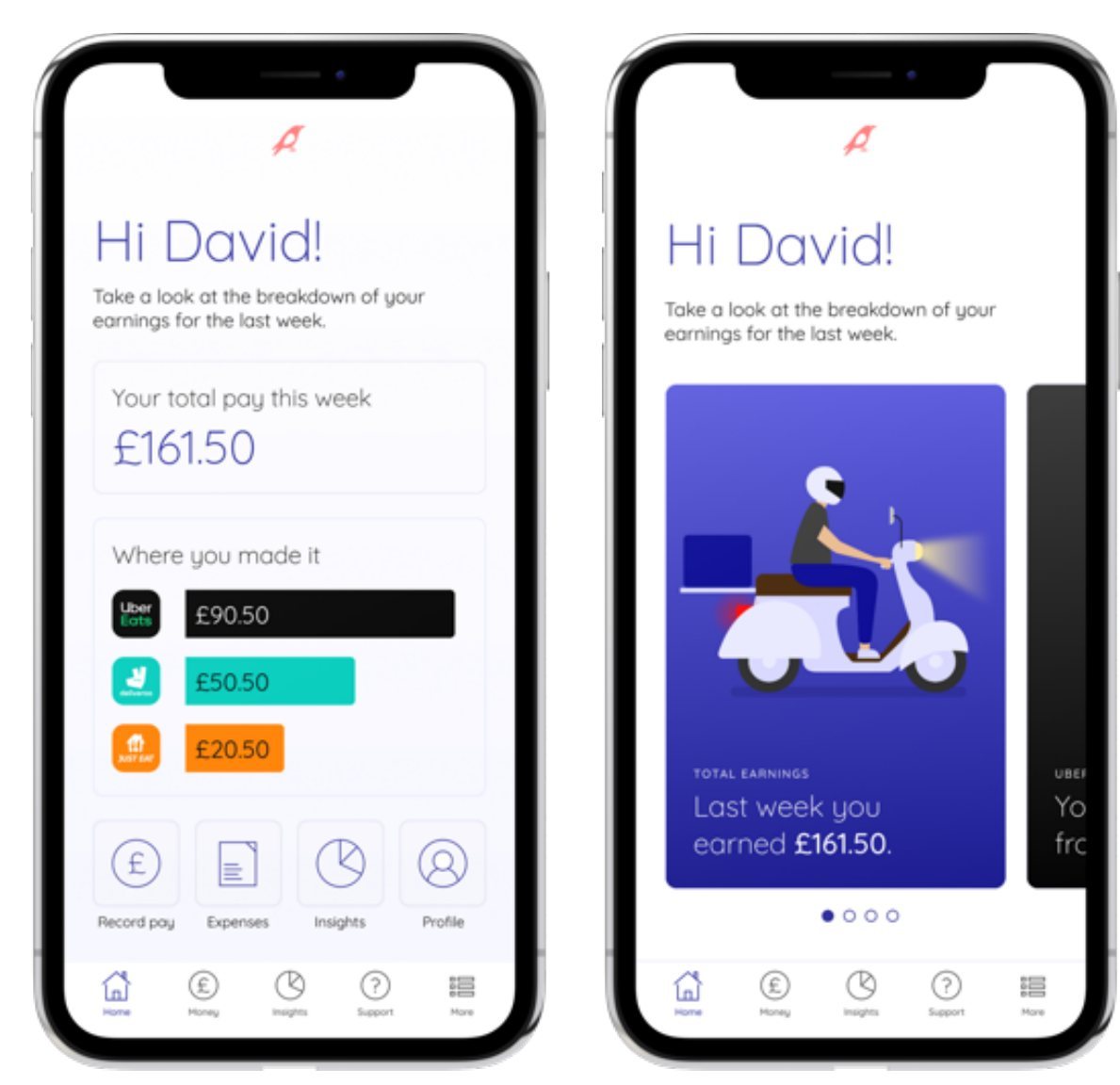
- Real pay: a true hourly rate that includes expenses, a first for gig workers. Riders could log actual spending, photograph receipts for tax time, and compare it against the HMRC mileage allowance.
- Working patterns: GPS tracking of all time out working, split into delivering and waiting, with a personal record of distance travelled and the best days to earn.
- Platform comparison: earnings, tips and boost or surge payments side by side across apps, so riders could see which platform worked best for them and when.
- Support and community: practical guidance on issues like avoiding and dealing with parking fines, growing into a resource riders could add to themselves.
- Worker voice: optional anonymous pooling of data to show averages by city, vehicle and platform, helping riders benchmark their pay and giving unions and advocates evidence to raise standards.
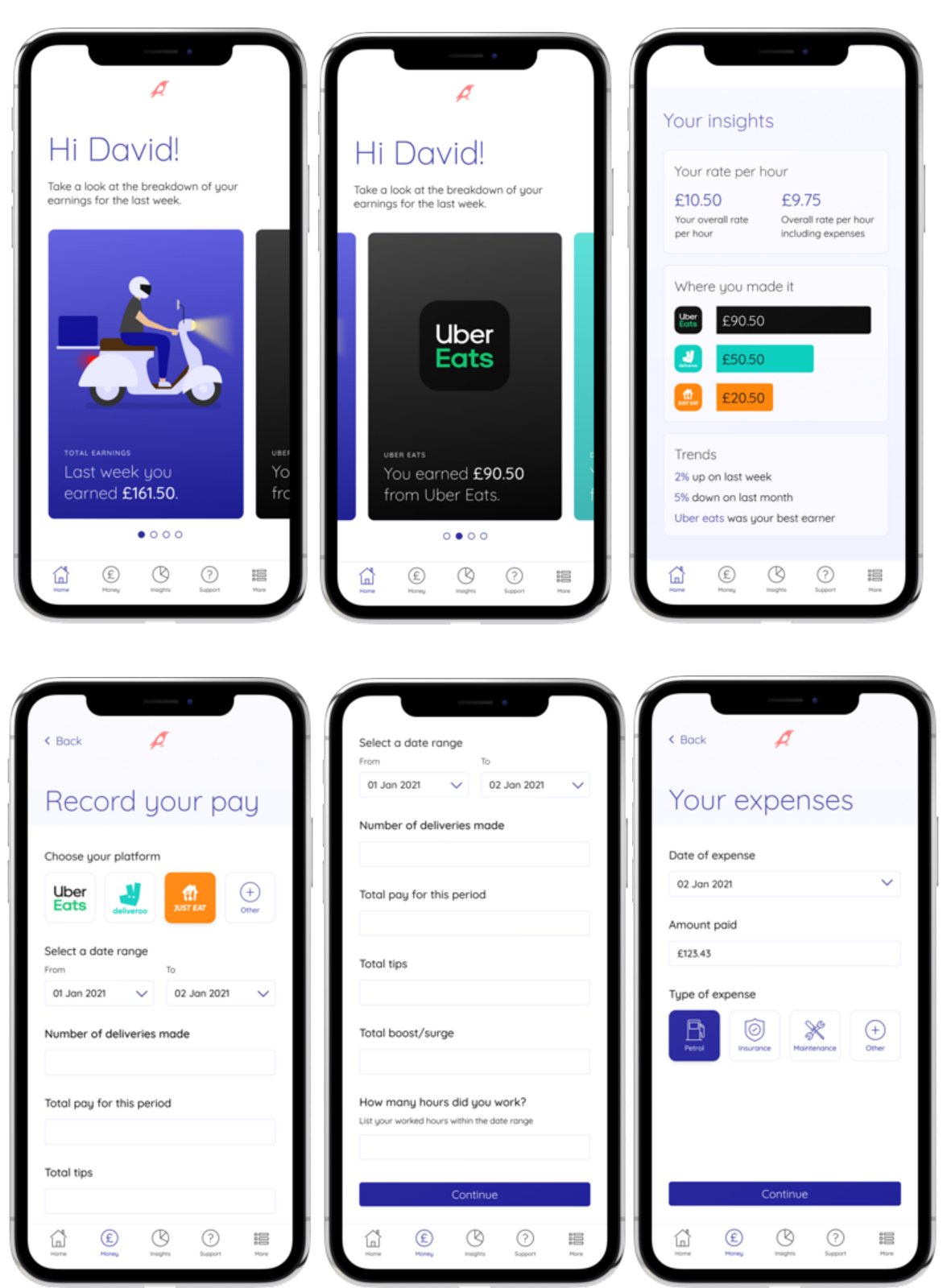
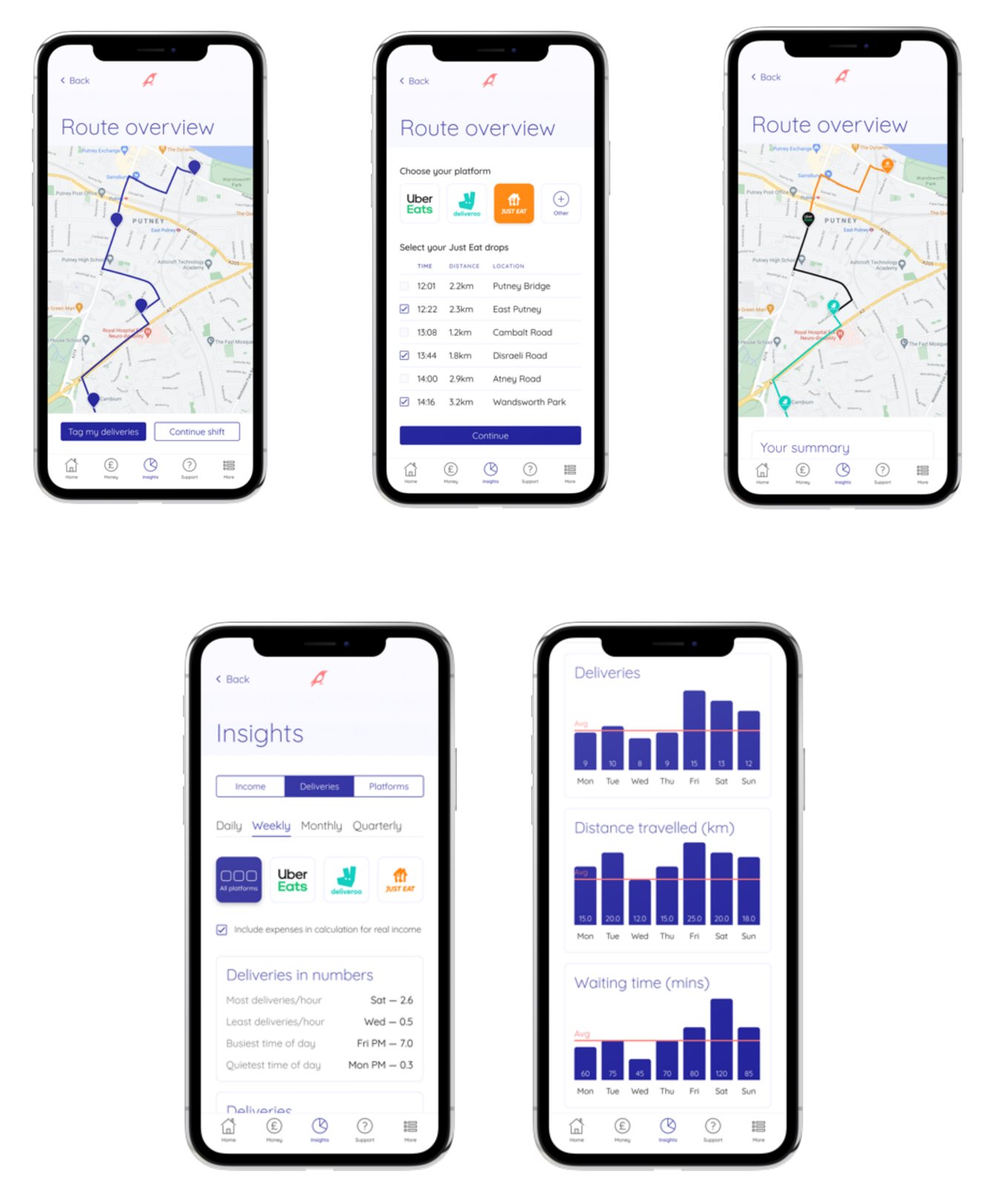
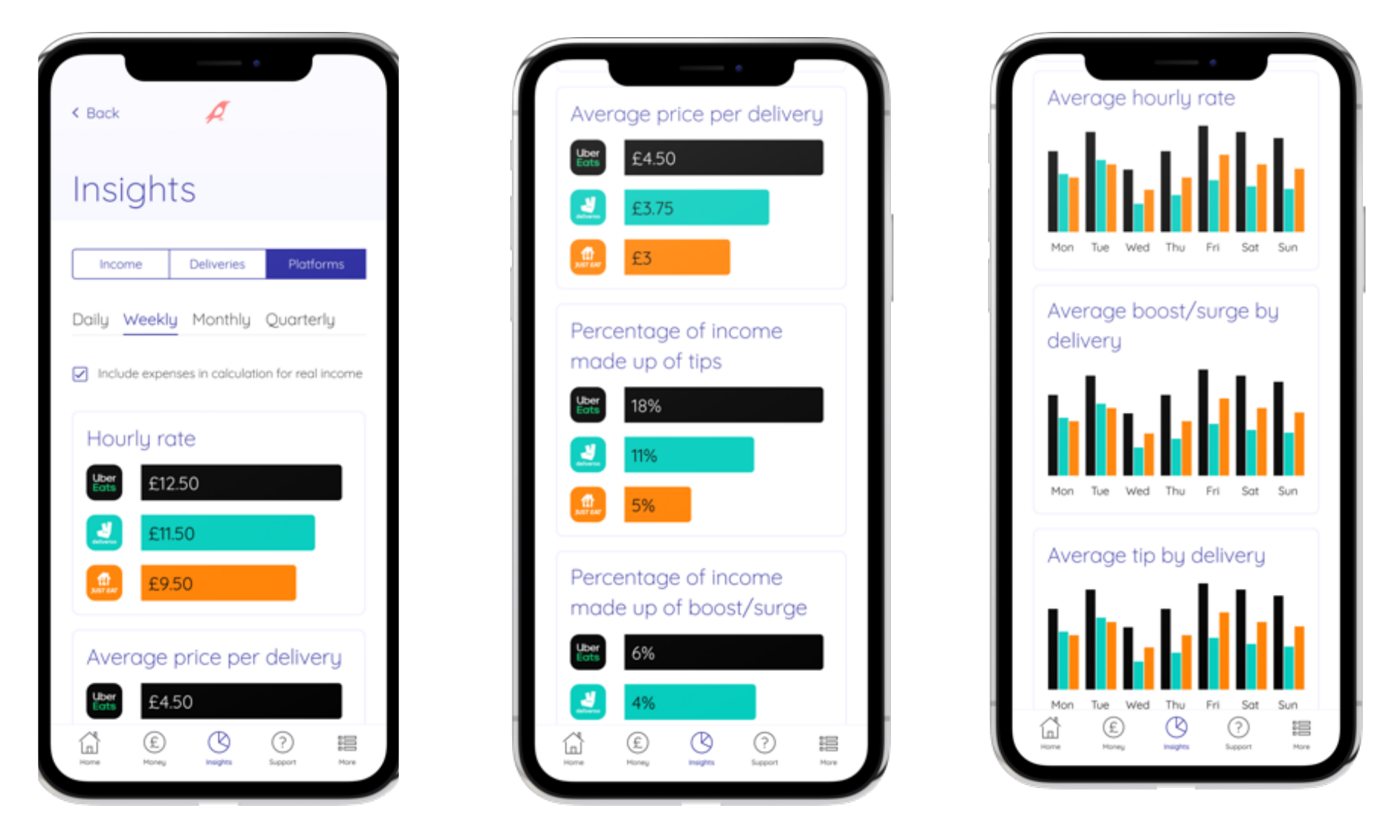
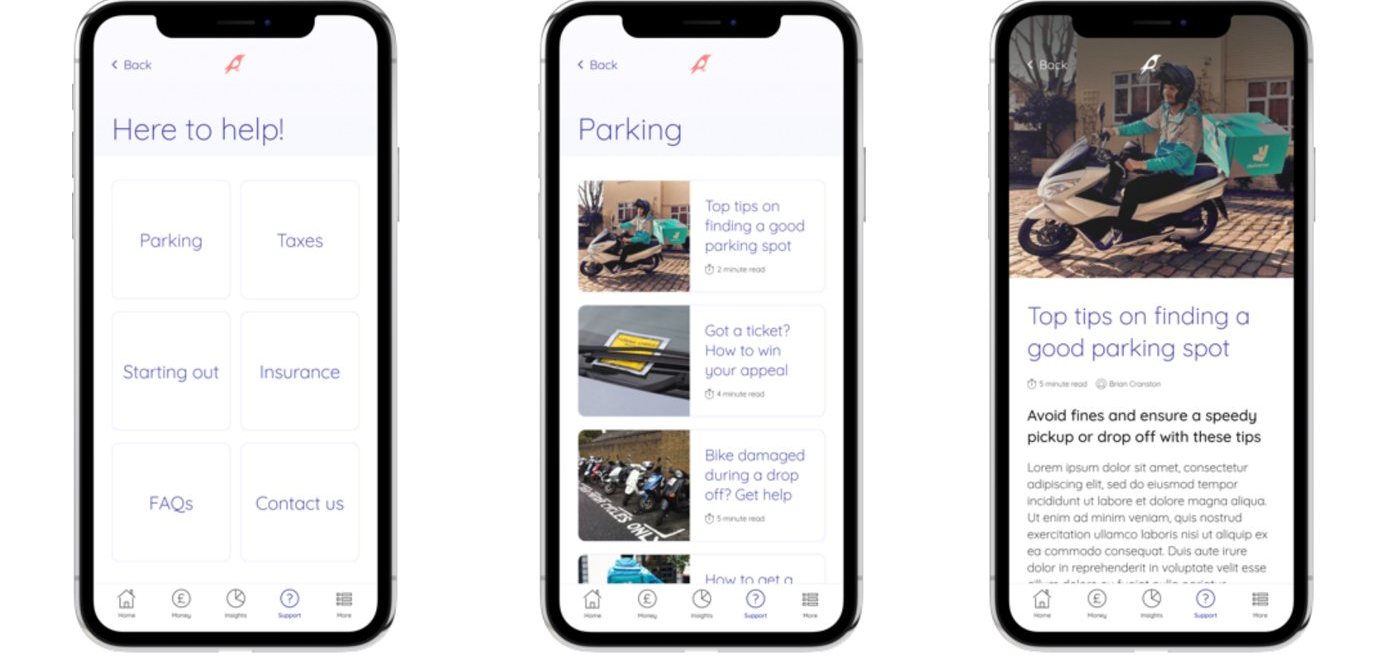
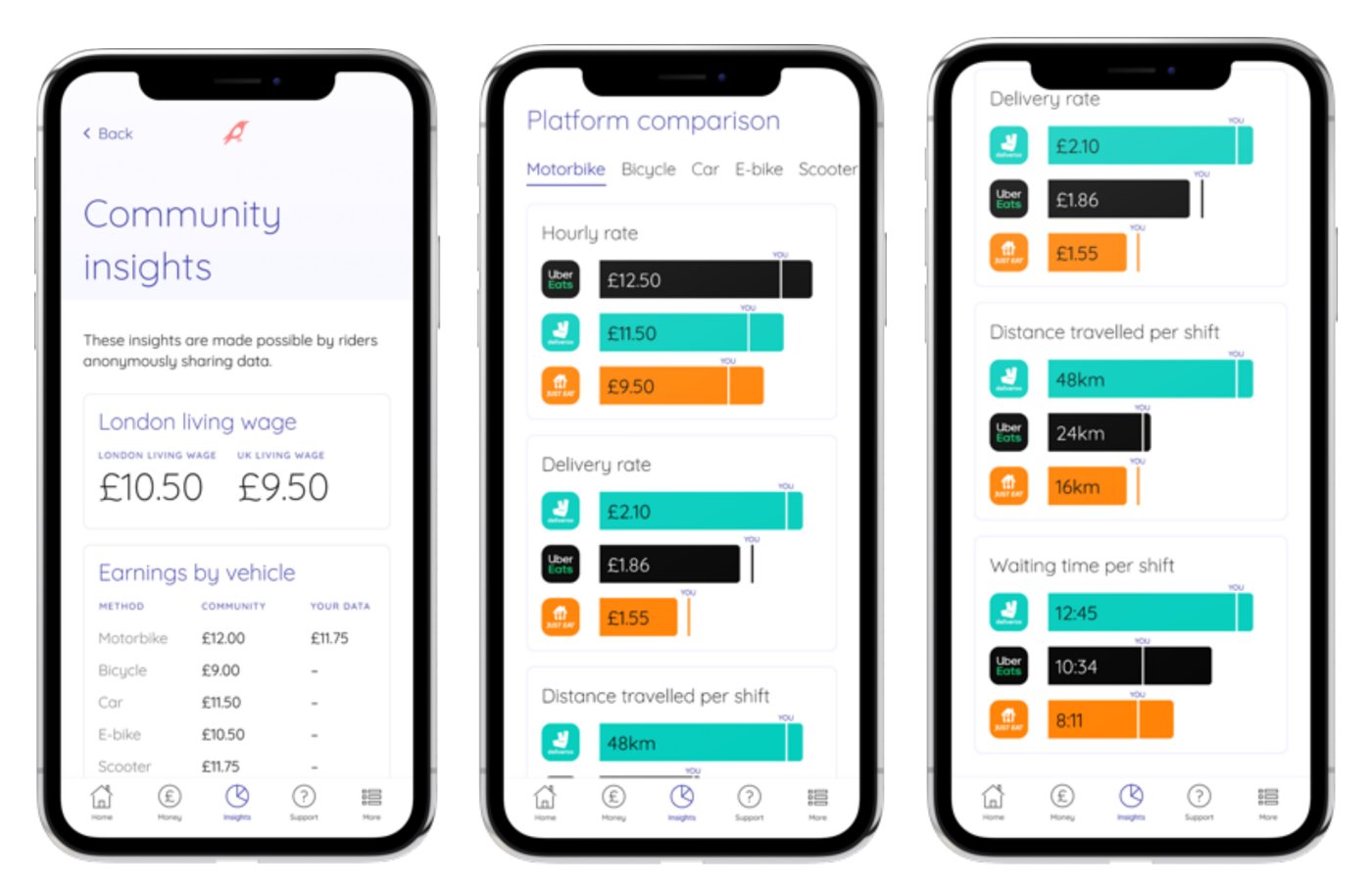
Riders who tested early designs chose between several homescreens. We planned development in three stages, from manual entry to GPS tracking to route tagging and full community insights, with pilots at each stage.
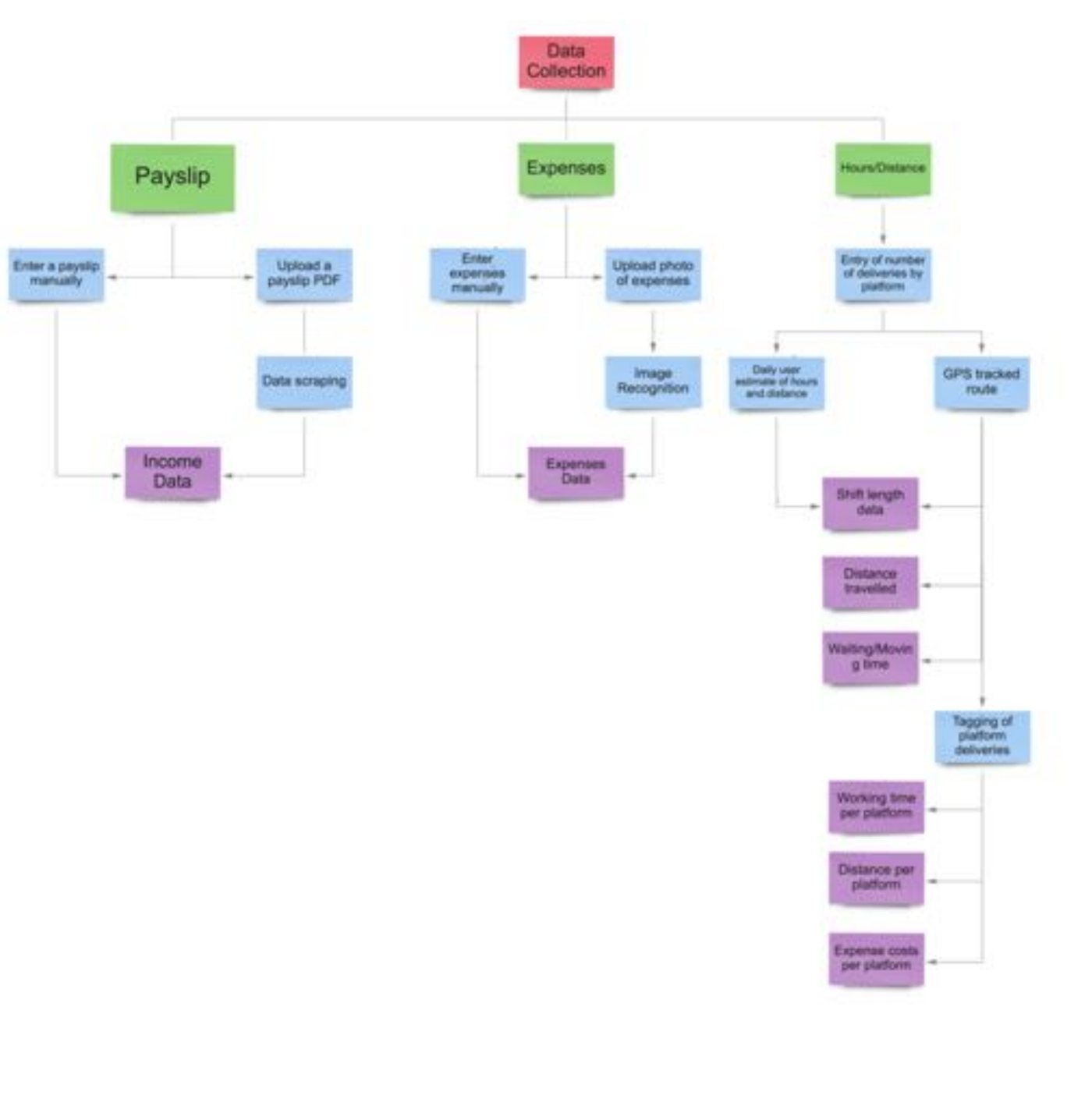
How the app gathers the data
Outcome
Riders who tested the designs liked their simplicity and the clarity of the information. The research also surfaced policy questions that had no clear answers yet, such as how much standby time should count as work and how to divide it across platforms when riders use several apps at once.
← Back to Workerbird